Ceiling Leak Water Damage Cleanup in St. Louis, MO
A stained, sagging ceiling means water is pooling above it. Call and a South County crew finds the source and dries it.
☎ (314) 501-7498Call now, a live St. Louis dispatcher picks up any hour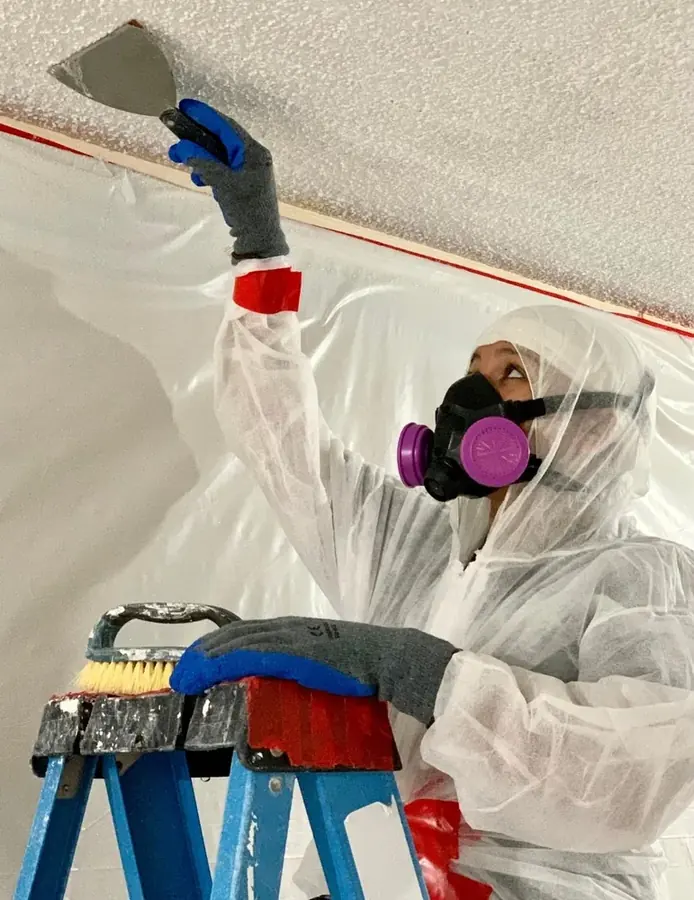
How ceiling leak water damage is handled in St. Louis
Call & dispatch
A real person answers 24/7 and the nearest South County crew rolls with truck-mounted pumps, air movers, and moisture meters.
On-site assessment
The crew finds the source and the full reach of the water, including what soaked into the slab, wall cavities, and subfloor.
Extract & dry
The extraction crew pulls the standing water, then runs air movers and dehumidifiers to a verified dry standard, not just the surface.
Verify & document
Crews log moisture readings until the structure is dry, then document the loss for your insurance claim.
A water-stained, sagging ceiling is never just a cosmetic problem. It means water is pooling in the cavity above, soaking into joists and insulation, and adding weight to drywall or plaster that can eventually let go. In St. Louis, the source is usually a floor above, and finding it fast is the difference between drying a ceiling and replacing one. St. Louis Water Damage Pros responds across South County.
What causes a St. Louis ceiling leak
Ceiling water almost always comes from somewhere upstairs or overhead:
- An upstairs bathroom, a failed supply line, or an overflowing tub or toilet
- HVAC condensate lines and a clogged drain pan in an attic or upper-floor unit
- A roof leak from storm or wind damage, tying into storm water damage
- A burst pipe in the ceiling or the floor above draining down
Storm-driven roof leaks are one reason the National Weather Service St. Louis warnings matter, and Ready.gov flood safety covers protecting a home from water intrusion of every kind.
Ceiling sagging or dripping? Put a bucket under it, stay clear, and call. A South County crew finds the source and dries it.
☎ Call (314) 501-7498What to do with a leaking ceiling
- Move furniture and electronics out from under the wet area
- If the ceiling is bulging, a small hole can safely drain the pooled water, but only if you can do it safely
- Shut off the water to the fixture or floor above if you can find the source
- Keep clear of ceiling light fixtures in the wet area, since water and electricity mix there
Signs of ceiling water damage
A brown or yellow ring spreading on the ceiling, a soft or sagging spot, flaking paint or cracked plaster, drips at a light fixture, or a damp smell in the room below a bathroom. A stain that grows means the leak is still active.
How crews handle ceiling water damage
Crews trace the leak to its source with moisture meters and thermal cameras, stop or drain the active water, and open the cavity where needed to check the joists and insulation. St. Louis Water Damage Pros dries the framing and remaining ceiling to a measured target with air movers and dehumidifiers, and documents the loss for your claim. Crews find the source first, because drying a ceiling while the leak is still running only buys a day.
Why South County calls the local pros first
Rapid local response
A real person answers 24/7 and the nearest South County crew rolls the moment you call, any hour, any day.
IICRC S500 drying standard
Trained crews with truck-mounted pumps, air movers, and moisture meters who dry to a verified standard, not a mop and a bucket.
Claim-ready documentation
The loss is documented with photos and daily moisture readings, the record an adjuster looks for. Coverage depends on your policy.
Deep St. Louis knowledge
Old brick basements, clay lateral lines, sump pits, and hard-freeze pipe splits. The local pros know how water moves here.
Rooted in South County, out to the metro
Based on Gravois Road in Affton, we respond across South County and the greater St. Louis metro, day or night.
Based in Affton in the heart of South County, the local crews cover South County and the greater St. Louis metro, day or night, and dry to the IICRC S500 standard.
Coverage runs across Affton, Sunset Hills, Sappington, Oakville, Mehlville, Concord, Lemay, Crestwood, Kirkwood, Webster Groves, and the south St. Louis neighborhoods.
See every neighborhood and ZIP covered ›Related water damage services
Common questions, answered
Is a sagging ceiling dangerous?
Yes. A sagging ceiling is holding pooled water and can collapse without much warning, especially wet plaster, which is heavy. Stay out from under it, move valuables clear, and call us. If you can safely relieve the water with a small drain hole, that reduces the weight, but do not risk it.
How do you find where a ceiling leak is coming from?
Crews use moisture meters and thermal cameras to follow the water back to its source, whether that is a supply line, a drain, an HVAC condensate line, or the roof. Finding the true source matters, because ceiling water often travels along a joist before it shows up somewhere else.
Can the ceiling be saved or does it need replacing?
It depends on how long the water sat and how far it spread. If crews get there quickly, crews can often dry the framing and much of the drywall in place and limit the repair. A ceiling that has been wet for days, or one made of soaked plaster, is more likely to need replacement.
South County's water damage crew is ready when you are
Water sitting means damage growing. Call St. Louis Water Damage Pros and a local crew heads out across South County, day or night.
(314) 501-7498Call now, a live St. Louis dispatcher picks up any hour